Scandinavian design has its origins in the 1950s and has become an integral part of the world of living. It emerged in the Nordic countries – Denmark, Sweden, Norway and Finland – as a response to the desire for accessible, functional and beautiful design for all. Since then, it has shaped interiors around the world with a distinctive mix of minimalism, naturalness and homely atmosphere.
Simple shapes and clear design principles
A central element of Scandinavian design are clear design principles. The focus is on reduced shapes, simple lines and the idea that every piece of furniture should not only be beautiful but also useful. Scandinavian designers such as Alvar Aalto and Arne Jacobsen have developed functional furniture that impresses with its simplicity and efficiency. The rule “form follows function” is a central principle in Scandinavian design. It is stated that the external design of an object should derive directly from its function, i.e. that the form is determined by its use. This concept originally comes from modern architecture and has constantly been developed further in Scandinavian design.
The user is the center of attention: furniture, everyday objects or home accessories must not only look good, but above all they must be practical, easy to use and durable. Scandinavian designers consciously avoid unnecessary decorations or elaborate embellishments. Instead, they focus on clear lines, simple shapes and natural materials such as wood, wool or leather.
A classic example is the famous “Egg Chair” by Arne Jacobsen – aesthetically elegant and functional at the same time. This philosophy creates a timeless style that appears both welcoming and modern.
“Form follows function” in Scandinavian design means: beauty comes from utility. It’s about achieving a lot with little, both in terms of design and sustainability.
Minimalist furnishings: less is more
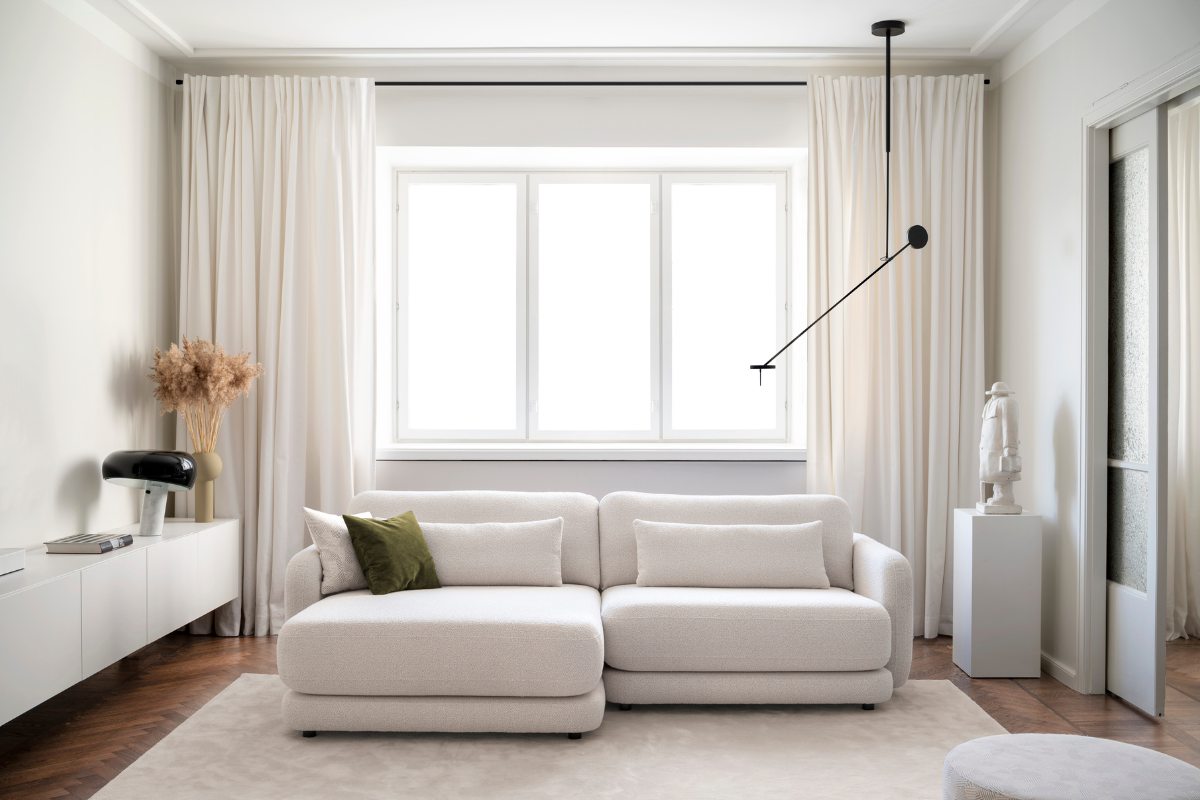
Another cornerstone of Scandinavian design is minimalist furnishings. You can never find too much in Scandinavian-style rooms. Every object has its place and its function. Unnecessary ballast is avoided, so that the room appears open, calm and airy. This is exactly what makes this style ideal for small apartments or city living. The reason for this way of thinking is the generally strongly held Scandinavian idea of sustainability, which places quality before quantity.
Bright and soothing color palettes
The color scheme follows a light and neutral palette. Typical are white, light grey, beige, sand tones and delicate pastel colours. These color palettes bring light into the room, optimally reflect daylight and create a feeling of space[BZ1] . Essential during the long, dark Scandinavian winters! Dark colors are only used specifically to create contrasts or set accents.
Natural materials create living warmth
The use of natural materials is also characteristic. Wood in its natural form – such as birch, pine or oak – is ubiquitous. It is complemented by linen, cotton, wool, felt, leather or ceramic.
The preference for natural materials in Scandinavian design has cultural and geographical roots. In Scandinavia nature plays a central role in everyday life, so wood, wool, leather and linen reflect this close connection with the environment. Furthermore, natural materials ensure warmth, comfort and a sustainable living atmosphere – important values in the Nordic lifestyle.
Hygge decoration: coziness included
An important element that makes the style particularly familiar is the Danish lifestyle, hygge. Hygge decoration does not only mean cozy accessories, but above all an atmosphere of security. Candles, soft blankets, handmade ceramic vases and natural fabrics help rooms not only look beautiful but also feel good.
A timeless living concept for modern lifestyles
Scandinavian design is timeless because it focuses on quality, functionality and reduction. It deliberately avoids fashionable extravagances and therefore remains elegant and current for decades. Even new trends like Japandi or Scandi-Boho integrate basic Scandinavian principles and show how versatile the concept is.
Scandi style: Welcoming, young and interpretable in a modern key
Modern interpretations show that Scandinavian style does not have to appear boring or sterile. Colorful accents, floral patterns or natural wall colors can be integrated harmoniously as long as the overall effect remains calm and balanced. The style appears young, friendly and inviting.
A living style that lasts
Scandinavian design is more than just a trend. It stands for clarity, comfort, quality and functionality. The combination of minimalist furnishings, natural materials, soft color palettes and the Hygge philosophy result in a living concept that is both functionally and emotionally convincing – and has therefore lost none of its relevance even after decades.
latest posts published

You should definitely pay attention to this!

Indoor gardening trend: green happiness for your home

The best design shops in Riga (Latvia)

Living ideas for Scandinavian furnishings

Christmas 2025: our trendy gifts in the shop

Insider tip for Christmas: designer jewelery from the Baltics!

What is the difference between a chest of drawers and a sideboard? Let’s find out!

Decorate your living room and bedroom in Scandinavian style

Muista office stool for more fun at work
