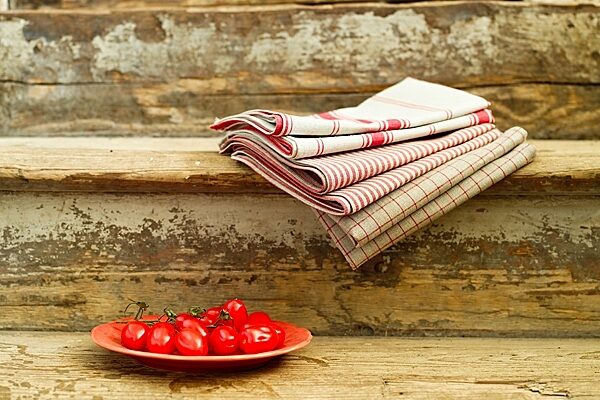
Tea towels and tea towels are an essential must for every kitchen. Even though most of our dirty dishes are now washed in the dishwasher, a tea towel must always be at hand: to dry and polish glasses without leaving streaks, to dry good silver cutlery in the sink after hand washing or to dry dishes straight out of the dishwasher. Tea towels are practical helpers always at hand if something goes wrong during cooking and can also be used as a replacement for pot holders for hot pans and pots. There is no need to hide beautiful tea towels with a beautiful design, because they also attract attention with a decorative effect.
Which fabrics are best for tea towels?
Tea towels and kitchen towels are available in different materials such as cotton, linen, semi-linen or microfibre. Depending on the use of the tea towels, all materials have advantages and disadvantages. If you wash by hand a lot, it is advisable to have several tea towels made of different fabrics available. Are you wondering what the best tea towels are? There is no general answer to this question, because it depends on what you want to use it for. So let’s do some materials science first:
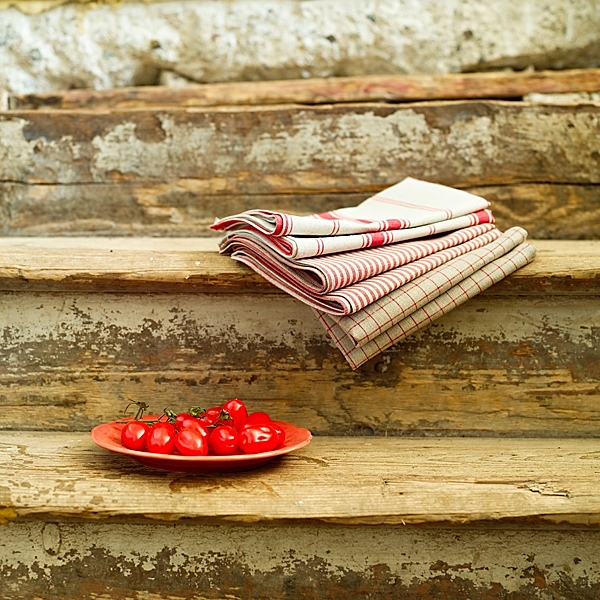
Linen tea towels
Pure linen tea towels can be used almost universally. The material is very absorbent, extremely durable and very resistant. The linen fiber is long-stapled and has a tightly woven structure, which makes this type of tea towel absolutely lint-free. Linen towels and tea towels are a little more expensive than towels made from mixed fabrics, but if they are well cared for they will often last a lifetime.
Half linen tea towels
Tea towels made from half linen have a 50% cotton content, meaning the feel of the fabric is slightly softer and smoother than pure linen. They are considered the all-rounder among tea towels and are often used in hotels and restaurants. The two natural fibers cotton and linen combine many advantages: They have a firmer structure than pure cotton cloths, but do not leave lint, and at the same time are more absorbent than pure linen cloths and yet are tear-resistant and robust.
Cotton tea towels
Cotton towels have always been a classic among tea towels and are cheaper than linen or semi-linen ones. The material is particularly absorbent but not as resistant as linen or semi-linen tea towels. They are particularly suitable for quickly drying dishes, pots and cutlery for everyday use.
Pit sheets
Pit sheets have a slightly rougher texture and are made of cotton or half linen. Typical of the sheet is its dark checkered pattern, usually grey-blue or grey-black, which makes dirt less visible. It is considered the all-purpose cloth in the kitchen and is therefore often used in the catering sector – for the classic quick drying of dishes, as a hand towel, as a quick pot holder or as a replacement for pot holders for hot pans and pots.
Microfibre tea towels
The microfibre cloths have a special, very absorbent honeycomb structure and can therefore absorb a lot of water. They are suitable for quickly drying plates, cups, pots and glasses and removing water stains without annoying streaks and lint. You can also easily remove limescale residues and unsightly fingerprints from glasses with a microfibre cloth and make them shine again.
Special requirements for a tea towel: which tea towels are good?
Now you’re wondering what the best tea towels are? Which tea towels absorb better and don’t produce lint? Choosing the right tea towel depends mainly on what you want to use for drying, but it is always also a matter of taste. Do you prefer natural materials and at the same time appreciate the beautiful design of your kitchen towels? Then with linen or half linen tea towels you are in the right place. They have a high absorbent power, are resistant and do not leave lint. With linen or semi-linen kitchen towels you can not only quickly dry plates, cutlery and glasses, but also polish them afterwards without leaving residues. Cotton tea towels absorb a lot of water, but can leave annoying lint on glasses. They are therefore more suitable only for drying everyday cutlery, plates and pots that do not need to be handled with the same delicacy. Microfiber cloths are a little more expensive to buy, plus they absorb a lot of water and don’t leave streaks.
Wash and care for tea towels
Tea towels are usually used every day in many kitchens: for drying plates and glasses, for drying hands or for a quick clean up if something goes wrong while cooking. They are often dirtier than the rest of the laundry, stubborn stains and all sorts of bacteria and germs live on the practical helpers. This makes it even more important to wash and care for them properly. We will give you some advice on this:
- First, always look at the manufacturer’s wash and care label and follow the washing instructions
- Normally you can wash cotton tea towels at 60 degrees, linen or half linen tea towels up to 95 degrees
- To prevent any bacteria and germs from spreading in the kitchen, you should wash them in the washing machine every two to three days if you use them frequently. However, washing at 40 degrees or using an economy program is not enough to completely eliminate bacteria and germs. Always wash kitchen towels at at least 60 degrees
- Avoid using fabric softener on kitchen towels so that they stay dry for a long time.
- Tea towels should be completely dry after washing before folding them again and putting them back in the cupboard. This prevents any residual bacteria from spreading further or even mold forming.
- If your kitchen towels are not yet very dirty but are still used every day, you can put them in the microwave for a few minutes on high power between washing the curtains to kill any germs.
latest posts published

You should definitely pay attention to this!

Indoor gardening trend: green happiness for your home

The best design shops in Riga (Latvia)

Living ideas for Scandinavian furnishings

Christmas 2025: our trendy gifts in the shop

Insider tip for Christmas: designer jewelery from the Baltics!

What is the difference between a chest of drawers and a sideboard? Let’s find out!

Decorate your living room and bedroom in Scandinavian style

Muista office stool for more fun at work
