

The living room is usually the center of our home: the place where we relax and rest in the evening after a long day at work. Alone, with your partner or with children: the living room offers an important refuge that is worth considering more closely in terms of sustainability.
Living sustainably: the basics
The living room is probably the room with the highest level Energy consumption. In this room not only the light but also the heating costs are particularly high.
The easiest way to save energy is to turn on your devices Stand-by mode are exchanged, or they completely removed from the network using a multiple socket with power switch.
Also there is one regular bleeding of the radiators it makes sense because air bubbles hinder the circulation of water and the optimal release of heat in the room.
In order for the heat to spread optimally throughout the room, there should be no bulky furniture or interfering curtains. Likewise, you should Winter pay attention to Never turn off the heating completely so that the walls do not cool down and increased heating demand occurs during heating.
When it comes to light, it pays to have regular light bulbs LEDs exchange.
Another point that unfortunately receives very little attention is the topic Space materials.
Chemicals, plastics and plasticizers are added to most wall paints, wallpapers, furniture and floors. They evaporate into the environment and harmful substances can enter our respiratory tract. When talking about wall paintings we should therefore look for the environmental label»Blue Angel“Pay as much attention as possible to the furniture, floors and wallpaper natural materials.
Furnishings and decoration for a sustainable stay
The furniture and decorative objects in the apartment or house are an expression of personal style and the first indication of a conscious lifestyle. It is important to keep an eye on the materials used to decide for or against one or another piece of furniture when it comes to sustainable living.
For curtains you should no synthetic material be used, but natural Cotton or linen. Ideally, the fabrics come from European textile factories that purchase raw materials from fair production. In addition to synthetic materials, materials of animal origin should also be considered critically in terms of sustainability. You can also easily use more natural materials in the living room when it comes to decorative objects:
For example with the Cornice; The mix of different wood shades looks interesting and elegant at the same time.
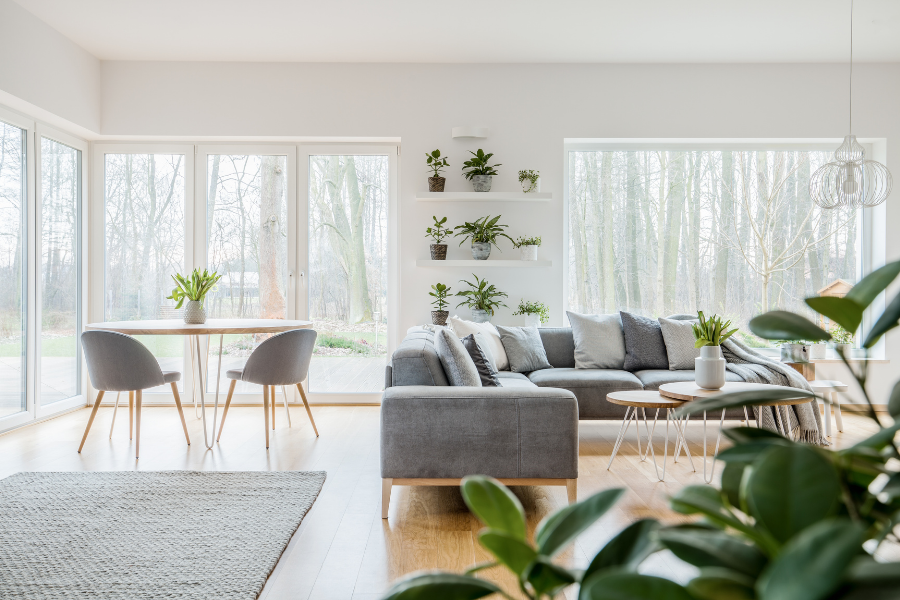
Houseplants ensure natural appearance and also have a beneficial effect on health; For example, the arched hemp or the birch fig, as well as the spider plant and the single leaf plant, which ensure a good indoor climate.
Bamboo For example, it not only looks good in the garden, but can also be used in the bathroom as a toothbrush or cotton swab, or in the living room as a decorative object in the form of baskets, runners or planters. Generally these should not be made of plastic, but of ceramic, clay or, as just mentioned, bamboo or other types of wood.
Also Blankets, pillows or rugs out Linen, cotton or virgin wool they are great accessories for greater sustainability in the living room. Furnishing items made of virgin wool are particularly ideal in winter, as they absorb body heat and thus guarantee greater well-being.
He’s an all-rounder Linen. Whether bed linen, sofa blanket, bedspread or pillowcase, the linen not only looks high-quality, but is also easy to care for. Pay attention to the «IVN Best» and «GOTS» seals. They inform you whether ecological standards are respected during production.
TO Furniture it’s worth a look Bulky waste or on one Flea market to throw away, furniture coming from «rubbish» or second hand often turns out to be real treasures. If you are concerned about the quality or less elegant appearance, you can take a closer look at recycled furniture. There are already some companies that, for example, produce PET baskets or chairs.
If you prefer to invest in something new, you should make sure that the furniture Seals such as “FCS”, “PEFC” or “Naturland”.«. These ensure that the wood is produced sustainably. Tropical wood should be avoided if possible, as should fabrics and upholstery that contain formaldehyde and heavy metals in the material.
Our conclusion: With a little sharper eye and a targeted approach, it’s not that difficult to design your living room sustainably. It’s important to throw away as little as possible and, where possible, limit yourself a little and consume consciously.
latest posts published

You should definitely pay attention to this!

Indoor gardening trend: green happiness for your home

The best design shops in Riga (Latvia)

Living ideas for Scandinavian furnishings

Christmas 2025: our trendy gifts in the shop

Insider tip for Christmas: designer jewelery from the Baltics!

What is the difference between a chest of drawers and a sideboard? Let’s find out!

Decorate your living room and bedroom in Scandinavian style

Muista office stool for more fun at work
