Our home is our refuge, where we relax from the hectic pace of everyday life and spend precious time with family and friends. Especially in turbulent times our desire for a beautiful and comfortable home increases. High-quality, sustainable furniture and accessories that ensure comfort make a special contribution to our well-being. Products made from natural materials are still in vogue and play an important role, especially in the production of Scandinavian furniture and home accessories.
In this article we show you which natural materials are particularly popular in Northern Europe and give you advice for a Nordic style home.
Birkenholz
Birch is especially important as a timber in Scandinavia, Russia and the Baltic countries. Thanks to its refined elegance and its numerous properties, birch wood is very popular in the Nordic countries, especially for making furniture. Birch wood is resistant but at the same time very flexible and can be worked in various ways thanks to its low weight and toughness.
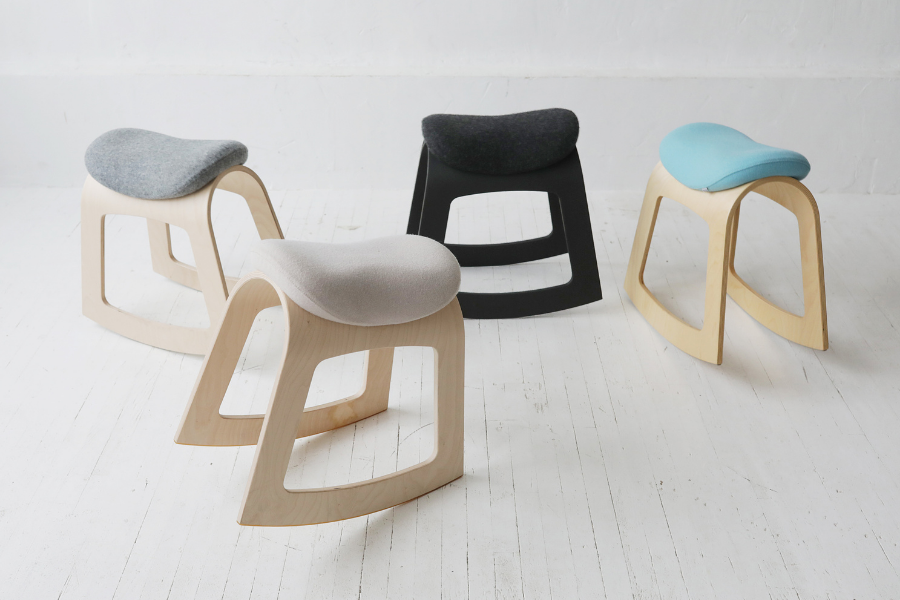
The colors of the sapwood and heartwood vary from yellowish-white to light reddish; some birch woods are almost completely white and have a beautiful silky sheen. Typical for this type of wood are the fine wood rays, the isolated red-brown spots and the easily recognizable, mostly reddish so-called «medullary rays». The wood is very suitable for being enamelled or painted. For protection and care, especially in Nordic countries, birch is often treated with beeswax.
In the Baltic Design Shop you will find Scandinavian furniture and accessories made mainly from birch wood and bring warmth and naturalness to your living room, bedroom, kitchen or dining room.
Oak wood
There are approximately 500 species of oak in the world, although most species are not suitable for producing high-quality wood. In Europe, mainly English and Sessile oak are worked, the wood of which is similar. The two species, more widespread in the north, require a fairly long and warm vegetative period, even if the oak is a little less demanding and tolerates both frost and water-saturated soil better. Oak wood offers many positive properties: it is robust and hard, but still has a certain elasticity.
The wood is very resistant to bad weather and insect and fungal infestation, it is easy to split and overall very easy to work with. Oak wood is yellowish-white to yellow-brown and has distinctive markings. Most species darken the heartwood to various shades of brown over time. Also typical for oak are the clear pore grooves and wide radii of the wood. Numerous rows of pores with large but less round pores can be seen in oak. Oak wood is also considered the most valuable local wood species in the north and is used to make windows, doors, parquet, floorboards and also specifically for the construction of furniture.
Eschenholz
There are also many different types of ash, but only a few are suitable for wood production. It is present in almost all of Europe and is, together with beech and oak, one of the most widespread broad-leaved trees. The most common occurrences occur in the Baltic countries and Poland, which is why furniture manufacturers from Estonia, Latvia and Lithuania willingly use this type of wood for furniture production.
Ash trees can reach a height of up to 40 meters and live up to 250 years. To obtain timber they are usually felled when they are 80-120 years old. Although the quality of its wood can vary greatly depending on where it grows, ash offers many positive properties that make it so popular, especially for making furniture. Ash wood is hard, tough and durable and has good strength. At the same time it has excellent elastic properties and can be easily processed with various tools. In furniture construction, ash wood is mainly used as a veneer or for the production of solid wood furniture, but is also used in the production of handles, for example for spades, shovels and brooms.
Ash wood has coarse pores and sometimes has very pronounced annual rings; marbled or cloudy patterns are typical. Depending on the species, the color of ash is between light, yellowish-white, yellowish-grey or reddish-white, although it tends to discolor if exposed to stagnant humidity and is therefore mostly used only for interiors.
Want
When talking about wool, a natural product, a distinction is made between animal and vegetable origin. Vegetable wool is, for example, cotton, animal wool is obtained mainly from sheep but also from goats, alpacas or camels. According to the Textile Labeling Act a product can only be labeled with the “wool” seal if it comes from animal fur. The best known and most widespread wool is sheep’s wool. To obtain wool, sheep are usually sheared once or twice a year – this is the so-called virgin sheep’s wool. Virgin sheep’s wool keeps you very warm and can also absorb a lot of moisture without feeling wet. If the fat content in the fiber is high enough, it can also be water-repellent.
Wool has been used in the Far North for thousands of years because it offers protection from the cold in the long winter months and keeps the body dry and warm in the autumn and spring months, despite heavy rain and strong winds.
Linen
For some time now, natural fiber linen has been on the rise again. Linen fabrics were already very popular in the Middle Ages because the fiber has many good properties.Linen is made from the stems of the flax plant and is a bast fiber. Forms bundles and single, non-disconnected fibers, like cotton. When talking about linen fabrics, a distinction is made between pure linen and half linen. Pure linen is 100% linen, while half linen is 60% cotton lengthwise and 40% linen crosswise. The half linen fabric is therefore softer to the touch and warmer. Due to these properties, linen is mainly used for the production of clothing, but also for home textiles such as curtains, bed linen, duvets or towels.
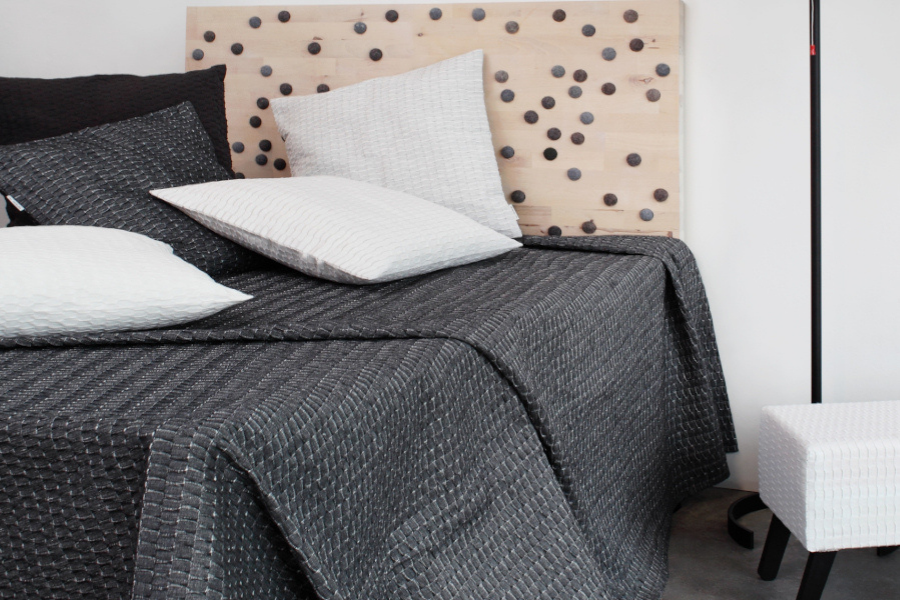
Linen is breathable, has high air permeability and good wear resistance. Linen is also very absorbent, skin-friendly and dirt-repellent. However, due to its low elasticity, linen, and especially pure linen, is quite prone to creasing. Its refreshing properties make the natural fiber very popular, especially on hot days, which is why linen is ideal for making summer bed linen.
sense
Felt is a non-woven material, usually made of wool, but can also be made with other textile fibres. High-quality felt is made from sheep’s wool, but there are also mixed types such as cotton, sisal, hemp or coconut, or synthetic fibers such as polyester or polyacrylic are used in the production.
Pure wool felt is always a 100% natural product, free of solvents or harmful substances and is also called fulled felt, while both natural and synthetic fibers can be used in the so-called needle felt. Both types have some advantages, such as excellent insulation capacity from cold and heat. It is also breathable, elastic, does not crease and warms very well. Synthetic fiber felt is also very durable and easy to shape. Natural felt has a beneficial effect on the air quality in rooms because the material can absorb excess moisture and release it into the surrounding air. It therefore supports the regulation of air humidity in living spaces. The water-repellent effect of felt is particularly advantageous in living areas: droplets of moisture simply slide off the felt and can be easily absorbed with a cloth or sponge.
Due to its good formability, felt is ideal for the production of furniture and home accessories, but is also used in the production of textile products such as hats, coats and shoes or in the production of wall coverings.
latest posts published

You should definitely pay attention to this!

Indoor gardening trend: green happiness for your home

The best design shops in Riga (Latvia)

Living ideas for Scandinavian furnishings

Christmas 2025: our trendy gifts in the shop

Insider tip for Christmas: designer jewelery from the Baltics!

What is the difference between a chest of drawers and a sideboard? Let’s find out!

Decorate your living room and bedroom in Scandinavian style

Muista office stool for more fun at work
