
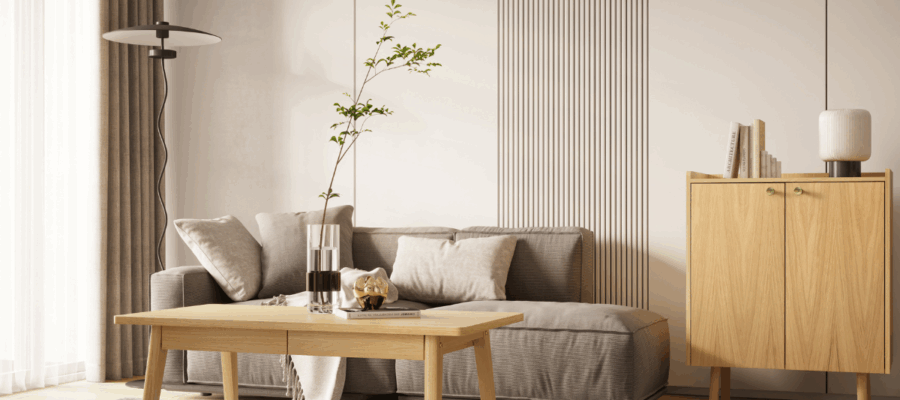
Choosing a coffee table or sofa table is a subtle art. A carefully chosen model is more than just a storage space: it becomes a central element that harmoniously combines function and aesthetics. A good table speaks your personal design language, complements the sofa and offers added value for everyday life. What you should pay attention to when buying a coffee table – you will find out in this guide article.
A sofa table is like the common thread of a room. It brings structure, offers a stage for your favorite items and at the same time fulfills very practical purposes. But before delving into the range, it’s worth asking yourself a few key questions:
What function should the table perform? Do you need storage space, a simple shelf or a statement piece?
How does the table fit into your existing interior? Think about the proportions of the room, existing furniture, materials and colors.
How practical is the model in everyday life? A table must not dominate the room, but rather enrich it.
The design of a coffee table or sofa is more than a matter of taste. It’s about how he speaks the language of the room.
Scandinavian design: Light woods such as oak or birch and functional shapes appear discreet and warm.
Industrial: A combination of metal and dark wood gives the room structure and an urban feel.
Minimalism: A reduced model with clear lines brings calm and elegance.
Mid-century modern: Organic shapes and bright colors create accents without overwhelming the room.
The style of the table should never be considered in isolation. A minimalist table in an already minimalist room can easily get lost, while a contrasting element often creates tension and depth.
The material of your table is crucial to effect and functionality.
Holtz: Natural, warm and versatile. Dark woods appear elegant, light woods appear light and friendly.
Glass: It creates transparency and makes small rooms seem larger, but requires more attention.
Metal: Robust and versatile, ideal for an industrial or modern style.
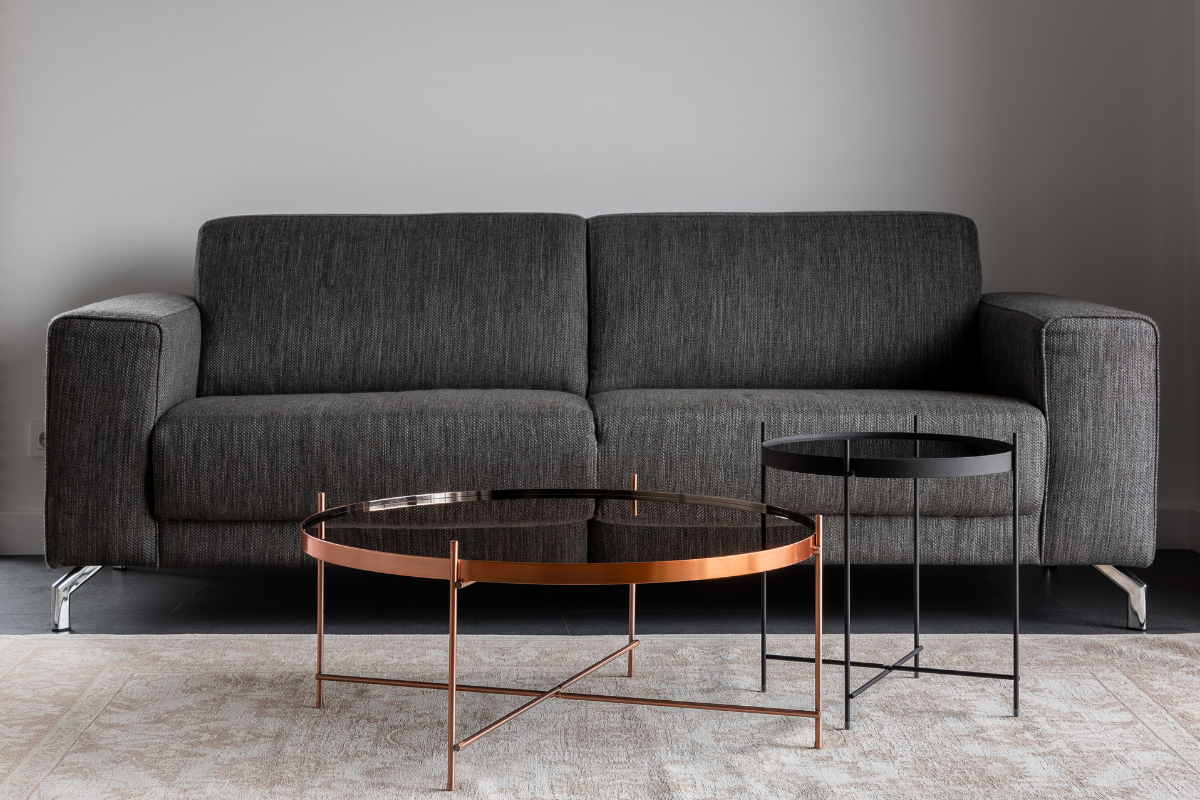
The combination: The combination of materials such as wood and metal gives the tables a dynamic aesthetic.
When choosing material, it is worth thinking about care. Wooden surfaces need protection from moisture, while glass needs regular cleaning.
Ideally, a coffee table should be at the same height or slightly lower than the sofa seat. The usual height is 40-45 cm, which allows you to comfortably hold objects without the table disturbing your vision or freedom of movement. However, a taller table can be useful if it is often used as a workstation or dining table.
The choice of color depends on your interior:
Harmonious: Choose colors that can be found in the room, such as carpets, cushions or curtains.
Rich in contrasts: A dark table in a bright room or vice versa can add accents.
Neutral: Tables in white, gray or wood are versatile and look timeless.
Make sure that the color of the table is not too dominant, but rather fits into the overall picture.
The size of a coffee table should be chosen proportionally to the sofa and the room.
Long: The table should be about two-thirds the length of the sofa.
depth: Enough space for decorations and everyday items without restricting freedom of movement.
Height: As already mentioned, the height depends on the seat of the sofa.
In smaller rooms, more compact models or even coffee tables can be a smart alternative.
Round coffee table: Ideal for smaller rooms or areas with lots of seating as it softens the room and has no sharp edges.
Square coffee table: Perfect for larger rooms and rectangular sofas as it offers structure and symmetry.
Round models promote a communicative atmosphere, while rectangular tables bring clearly defined lines into the room.
The rug should be large enough to at least include the front legs of the sofa and coffee table. A general rule: the carpet should extend at least 20-30 cm beyond the edge of the table. A rug that is too small can make the room seem disjointed, while a well-proportioned rug creates harmony.
If a coffee table doesn’t fit, there are creative alternatives:
Coffee tables: Several small tables that can be arranged flexibly.
Stools or poufs: These can serve as storage or additional seating.
Chests: Practical for having additional storage space and decorative at the same time.
Console: For rooms with limited space, narrow wall-mounted consoles can replace the coffee table.
The distance should be around 40-50 cm so that you can move comfortably and the table is still easily accessible. Too little distance feels cramped, too much distance interrupts the flow of the room.
A coffee table or sofa table is not just a piece of furniture – it is part of your personal living space. Take the time to find a model that not only impresses aesthetically, but also meets your needs. In the Baltic Design Shop you will find a special selection of coffee and coffee tables that will delight design lovers and were produced in Europe
latest posts published

You should definitely pay attention to this!

Indoor gardening trend: green happiness for your home

The best design shops in Riga (Latvia)

Living ideas for Scandinavian furnishings

Christmas 2025: our trendy gifts in the shop

Insider tip for Christmas: designer jewelery from the Baltics!

What is the difference between a chest of drawers and a sideboard? Let’s find out!

Decorate your living room and bedroom in Scandinavian style

Muista office stool for more fun at work
